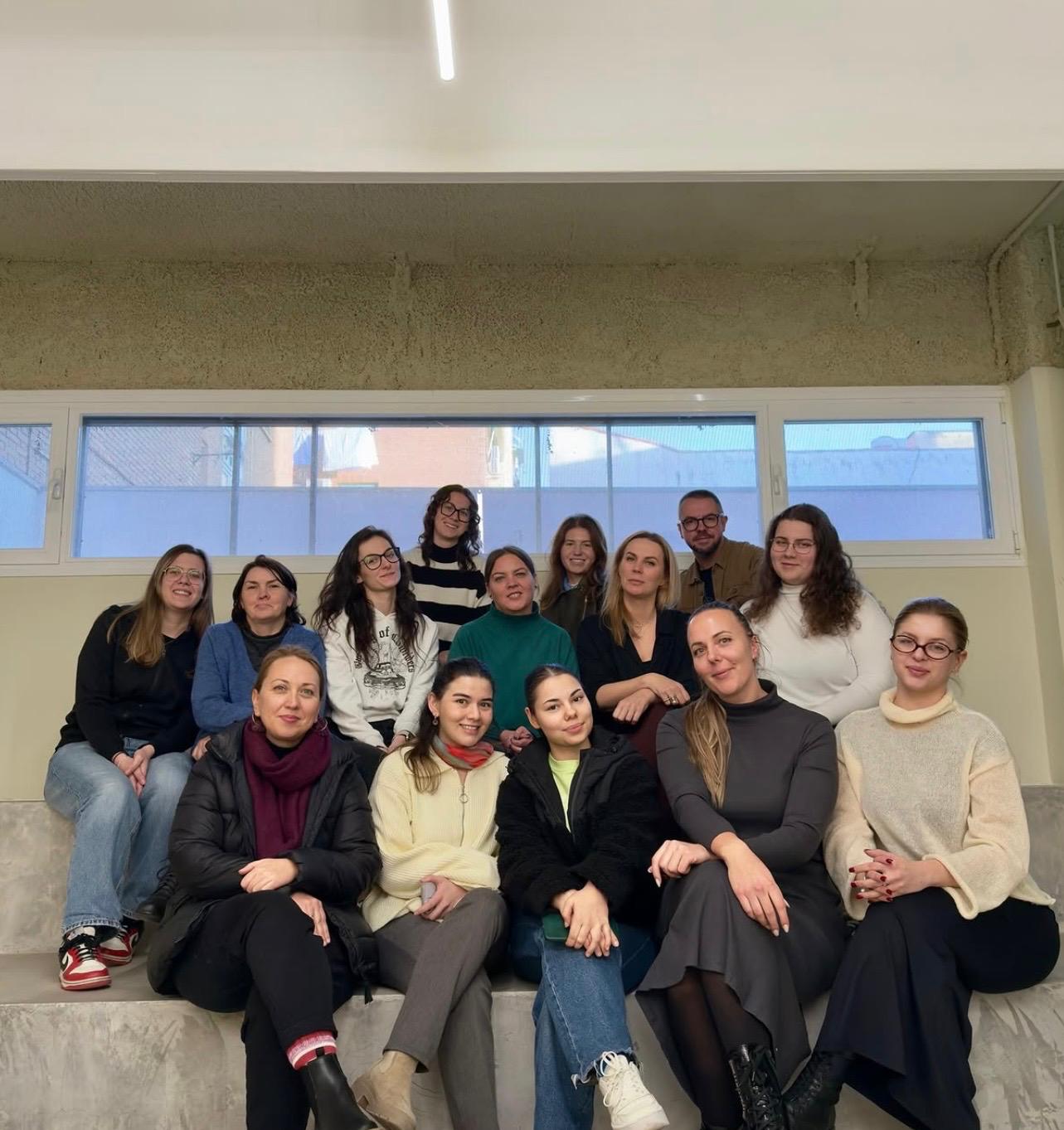
From 7 to 12 December 2025, youth workers gathered in Madrid for the Erasmus+ KA1 training course “Transferring the LifeComp Framework into Youth Work to Foster Positive Mental Health Among Disadvantaged Youth.” The activity aimed to strengthen the capacity of youth professionals to support the wellbeing, personal development and social inclusion of young people facing different forms of disadvantage.
The programme introduced participants to LifeComp, the European framework for personal, social and learning-to-learn competences. Through interactive presentations, practical exercises and exchanges of experience, youth workers explored how the framework could be transferred into non-formal education activities adapted to the needs of young people and youth organisations.
The first sessions focused on LifeComp’s personal area, including wellbeing, flexibility and self-regulation. Participants exchanged practices used in their organisations and co-designed new activities supporting resilience, emotional awareness and personal development.
The programme then explored the social area, with particular attention to empathy, communication and collaboration. Participants reflected on how these competences can contribute to positive mental health and help youth workers create inclusive environments in which disadvantaged young people feel heard, respected and able to participate.
The learning-to-learn area introduced participants to growth mindset, critical thinking and managing learning. They analysed the needs of different profiles of disadvantaged young people and discussed how educational opportunities can become more accessible, motivating and responsive.
The training was enriched by guest contributions from Irene Yagüe from the IE Center for Health and Wellbeing and Paloma Cantero, who provided additional perspectives on lifelong learning and positive mental health.
Co-creation remained central throughout the programme. After exploring each LifeComp area, participants developed practical non-formal education activities that could be applied within their organisations. They later prepared organisational action plans and dissemination strategies to transfer the knowledge and tools acquired to their colleagues and local communities.
Daily reflection and evaluation activities helped participants assess their professional development and identify changes in their knowledge, attitudes and practices. The programme concluded with a final debate, a networking café and a Youthpass ceremony.
Participants left Madrid with practical methodologies, stronger international professional connections and an increased capacity to use LifeComp competences to foster positive mental health among disadvantaged young people.
Useful resources: Toolkit for youth workers