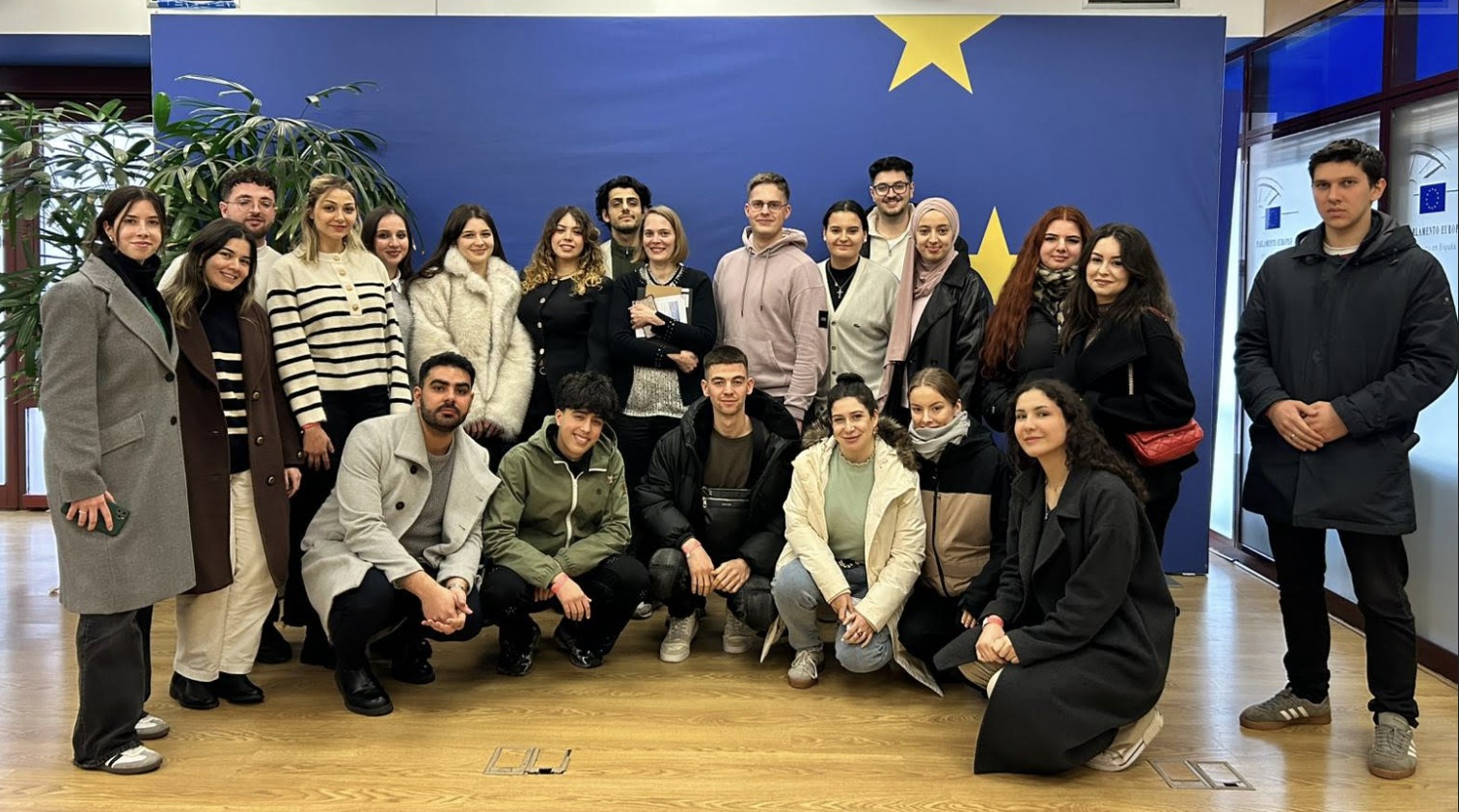
From 1 to 6 February 2026, we hosted in Madrid the Erasmus+ KA1 Youth Exchange “Working with the EU to Enhance Disadvantaged Youngsters’ Participation.” The project brought together young people from different European countries to strengthen their understanding of European institutions, democratic participation and the opportunities available to citizens who wish to contribute to public decision-making.
The programme began with an introduction to the European Parliament, its structure and its role within the European Union. Participants explored how European decisions affect their daily lives and learned how to navigate the Parliament’s website to find information about Members of the European Parliament, legislative files and policy developments.
Institutional visits to the Congreso de los Diputados, the Senado and the European Commission’s representation allowed participants to gain direct insight into Spanish and European decision-making processes. These experiences helped make political institutions more understandable and accessible.
A major focus of the exchange was the barriers that prevent many young people, particularly those facing social, economic, geographical or educational disadvantages, from participating in democratic life. Through debates and group exercises, participants discussed low electoral participation, limited representation, distrust in institutions and the lack of accessible information.
The programme also showed that democratic participation extends beyond voting. Participants explored the right to petition the European Parliament, online activism and clicktivism, as well as different forms of civic engagement such as volunteering, advocacy, campaigns and community initiatives.
Interactive sessions encouraged participants to assess their own level of involvement and distinguish between symbolic consultation and meaningful participation.
During the advocacy workshop, participants identified challenges affecting their communities, mapped relevant stakeholders and developed campaign ideas. They also strengthened their media-literacy skills exploring the influence of misinformation on democratic processes.
In the final sessions, participants analysed European initiatives promoting youth participation and created social media campaigns to encourage their peers to become informed and active citizens. Daily reflection activities helped them recognise their learning outcomes and connect the programme with their own communities.
The exchange concluded with a final evaluation and a Youthpass ceremony. Participants left Madrid with greater confidence, stronger democratic competences and practical tools to encourage disadvantaged young people to participate at local, national and European levels.